Sardinia and Nuorese by car
Hiring a car is very simple, also it allows you to visit parts of the island that would, unfortunately, be impossible by taxi or public transport. In any case, we always recommend that tourists reach Sardinia by car, as the public transport, even if it does serve the majority of towns and villages throughout the island, is rather slow, and there is no rail line that serves the whole island. There aren't many cities in Sardinia so it is better to drive from one place to the next, and few of the holiday villages are served by all public transport services, so it is wiser to have your own transport.
Recommended itineraries departing from Tortolì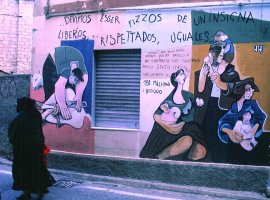
- Orgosolo - reached by following the road for Villagrande Strisaili, situated at the junction of the 389 motorway for Nuoro. The village is in the heart of the region of Barbagia and is part of the Gennargentu Park. Worth a visit just to admire the numerous "Murales", designs painted during the 60's and 70's, onto the walls of houses, to denounce the intolerances, abuse, and social injustice suffered by the villagers in the past. There are also murals depicting recent events such as the attack on the "Twin Towers".
- Oliena - reached via the SS125 motorway northbound. You will find the indications for Oliena after Dorgali. A Barbagian village, mostly famous for the production of women's shawls, decorated by hand, which form part of the traditional costume; Nepente wine; cheeses; sweets and Pane Carasau bread; and its ancient courtyards. Nearby are the springs of Su Gologone, the largest in Sardinia, from which runs a perfectly pure mineral water. Also, the restaurant "Su Gologone" which is known throughout Italy.
- Nuoro - Reached by following the road for Villagrande Strisaili and then the SS389 to Nuoro. Here, you can visit the Speleo-archaeological museum, the museum of popular traditions, the museum of Grazia Deledda, and the church of grace built in the 7th century. On Mount Ortobene, in the park, worth seeing is the statue of the Redeemer, overlooking the city. Also of interest is the MAN museum which houses various modern and contemporary works of art.
- Dorgali - reached via the SS125 motorway northbound. Along with its small museum, this village is renowned for its production of rugs and ceramics, and its eno-gastronomic products. Cala Gonone, a seaside resort with a small tourist port. After Dorgali, heading for Orosei northbound, you can see the wondrous caves of "d'Ispinigoli" with its stalagmites that are the highest in Europe at 38m.
- Coastal Visits - Departing from Tortolì along the SS125 for Cagliari, you can visit the beaches of Barisardo: Cea, and Torre di Bari, famous for its Saracen tower. Continuing south, you arrive at Cardedu, and the marina of Gairo and its beaches Su Sirboni (not well signposted; better to leave the car and walk for 10mins) and Coccorocci. Continuing further south, you reach the borders of Ogliastra and the village of Tertenia with its uncontaminated terrain of Sarrala and the Saracen tower. To the north of Tortolì, you can find the beaches of Lotzorai. Santa Maria Navarrese is also well worth seeing, by following the SS125 towards Baunei. Also, Pedra Longa, the rock formation overlooking the sea.
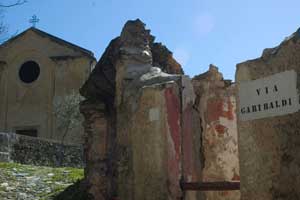
- Osini, Gairo and surrounding areas By following the SS125 towards Cagliari, and turning right you will come upon Jerzu, famous for its Cannonau wines. Beyond Jerzu, you find Ulassai, home of the contemporary artist Maria Lai. In the local railway station, there is one of her works. Close to the village, you can participate in a guided tour of the Grotte Su Marmuri caves. Passing Ulassai, we find Osini, at 1000m above sea level. Worth visiting are the nuragic villages and the natural monument "The Steps of San Giorgio". Also, there is the old village, abandoned in 1951 because of the great landslide of that year. Outside Osini, take the right-hand turning for Gairo, a zone rich in natural beauty, especially the caves and forests.
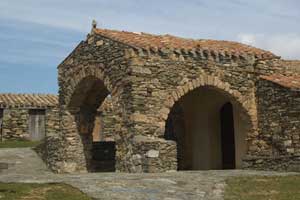
Here, too are the remains of an old village wrecked by the same disaster that hit Osini. From Gairo, you can head back to Tortolì, maybe passing through Lanusei on the way to visit the Bosco di Selene woods and take a guided tour of the archaeological sites. Otherwise, after Osini, you could continue towards Ussassai (SS198), a small mountain community, known as the village of apples. There are various megalithic and nuragic structures just outside the village, along with the forest of Montarbu and Mount Tonneri. Another interesting village after Ussassai is Seui (SS198). Characterised by its old town centre with its old baronial prison dating from the Spanish dominion, the liberty style square that houses the town hall and the Museum of Rural, Pastoral and Mining Civilisations. This itinerary is adequately ample, so we leave it to you, the tourist, to choose where to go as the road leading to these villages is rather winding, given the presence of the surrounding mountains. Whichever way you go however, it is still easier by car!